

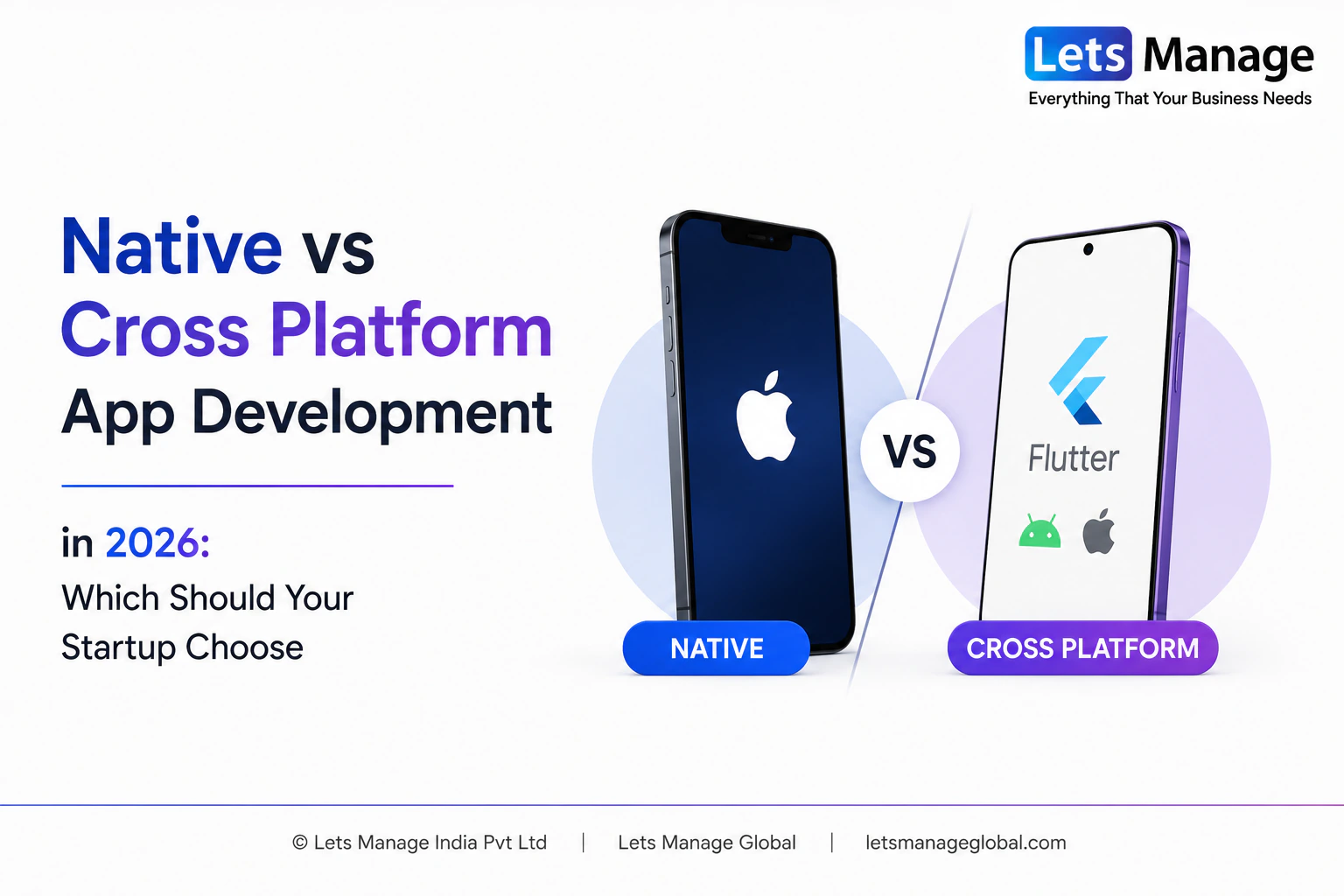
Quick answer: Native apps (built separately for iOS and Android) offer the best performance and platform specific features, while cross platform apps (built once using frameworks like Flutter) launch faster and cost less, and are the right default for most startups validating a new product.
What "native" and "cross platform" actually mean
Native development writes separate code for iOS (Swift) and Android (Kotlin), giving full access to each platform's capabilities. Cross platform development writes one codebase that runs on both, trading a small amount of performance and platform specific polish for significantly faster delivery and lower cost.
When native is worth the extra cost
- Apps depending heavily on camera, AR, Bluetooth hardware, or complex animations
- Apps with millions of expected users where performance at scale is business critical
- Apps where the brand experience must feel indistinguishable from platform native apps (banking, high end consumer apps)
When cross platform is the smarter first move
- First time app founders validating demand before large investment
- Booking, delivery, service marketplace, and content apps where core functionality matters more than platform specific polish
- Startups needing to launch on both Android and iOS simultaneously with a limited runway
The real cost comparison
Native development effectively means building the product twice, once per platform, which typically costs 40 to 70 percent more than a cross platform build for the same feature set, and takes longer to reach both app stores at once.
What actually determines success (it is not the framework)
App store rejection, poor onboarding, slow load times, and unclear value propositions kill more early stage apps than the choice between Swift and Flutter ever will. The framework decision should follow the business model, not the other way around.
FAQ
Is Flutter good enough for a serious business app in 2026?
Yes, for the vast majority of business use cases including booking, delivery, community, fintech-lite, and content apps. Large scale, hardware intensive apps are the main exception.
Can a cross platform app be converted to native later?
Yes, once user demand and product-market fit are proven, a business can rebuild specific high performance modules natively while keeping the rest cross platform, or migrate fully.
How long does it take to launch an MVP app?
A focused MVP with core booking or transaction functionality typically launches in 10 to 14 weeks including app store review time.