

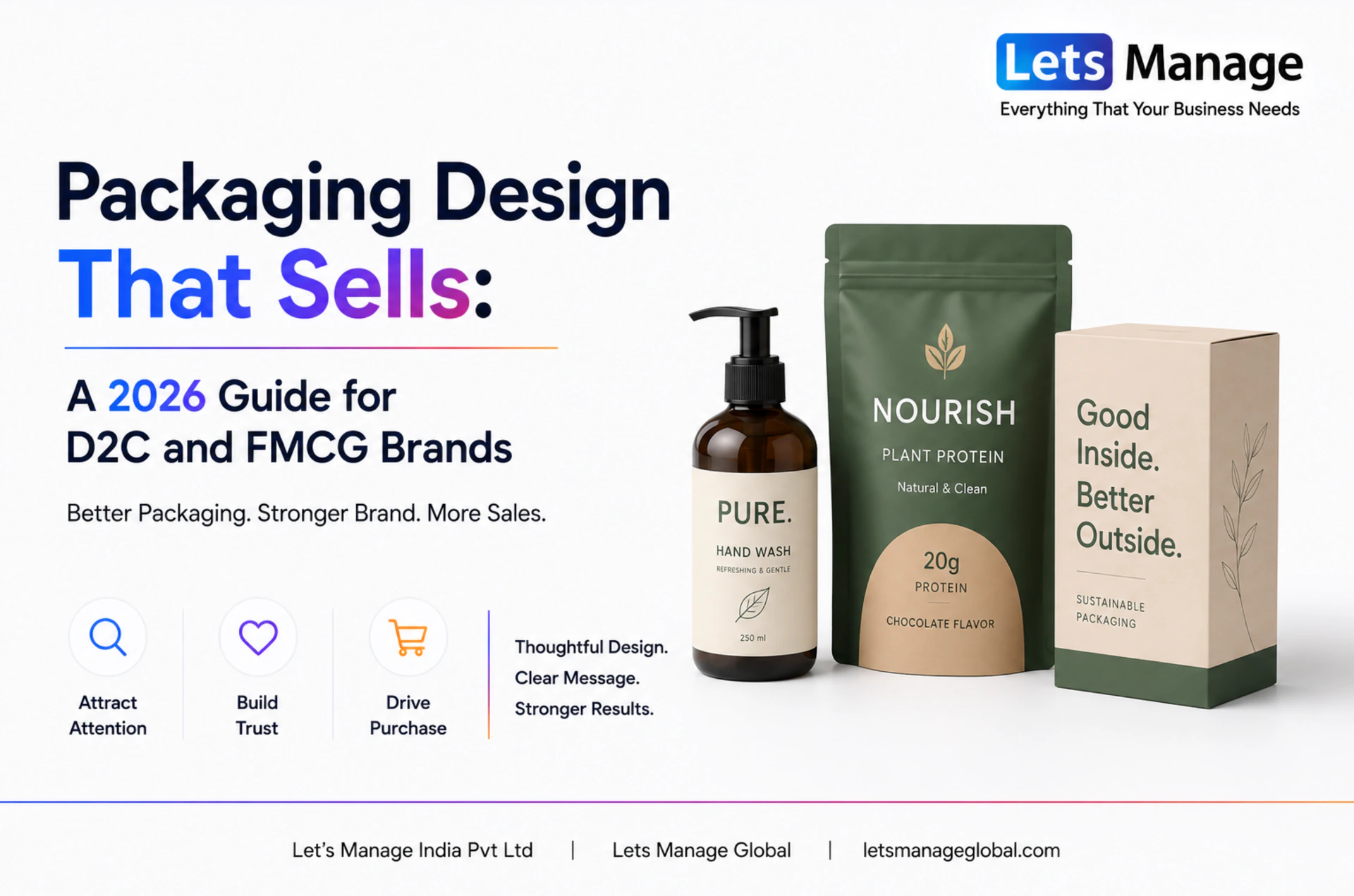
Quick answer: Packaging that sells is not primarily about looking beautiful, it is about winning the three second shelf decision: standing out in category color context, communicating the core benefit instantly, and building enough visual trust for a first time buyer to choose it over a familiar competitor.
What actually influences purchase decisions at shelf
- Color contrast within category norms: Standing out from competitors while still visually signaling the correct product category (a snack that looks like a supplement confuses buyers instead of attracting them)
- Front of pack hierarchy: The single biggest buying reason should be readable from an arm's length in under two seconds, not buried among five competing claims
- Trust signals: Certifications, ingredient transparency, and a professional finish reduce first time buyer hesitation, especially for food, wellness, and personal care categories
- Photography and print quality consistency: Packaging that looks different in photos versus in hand erodes trust fast, particularly for D2C brands selling primarily online
The 2026 shift: packaging designed for two environments at once
Packaging today has to work in two very different contexts: on a physical shelf competing with dozens of neighboring products, and as a thumbnail sized product image scrolling past on Instagram or an e-commerce listing. Design decisions that work at full size on a shelf can become illegible at thumbnail size, so modern packaging projects test both contexts before finalizing.
Common packaging mistakes that quietly reduce sales
- Overloading the front panel with every claim and certification at once, diluting the single most persuasive message
- Ignoring regulatory and labeling compliance requirements until after design is finalized, forcing a late and costly redesign
- Designing only for the hero product shot, without checking how the design reads in a cluttered shelf or search results context
FAQ
How much does professional packaging design cost?
Depending on SKU count and complexity, packaging design projects typically range from Rs 15,000 for a single SKU refresh to Rs 1,00,000 and above for a multi SKU brand system with print ready files.
Does packaging redesign really move sales numbers?
Yes, for brands where the previous packaging had inconsistent design, unclear hierarchy, or an outdated look, a redesign frequently produces a measurable listing conversion and repeat purchase improvement, as shown in the case study later in this document.
Should packaging design happen before or after the brand identity is finalized?
After. Packaging should be built from an already defined brand identity system (colors, typography, tone), not created in isolation, to keep the brand consistent across every customer touchpoint.