

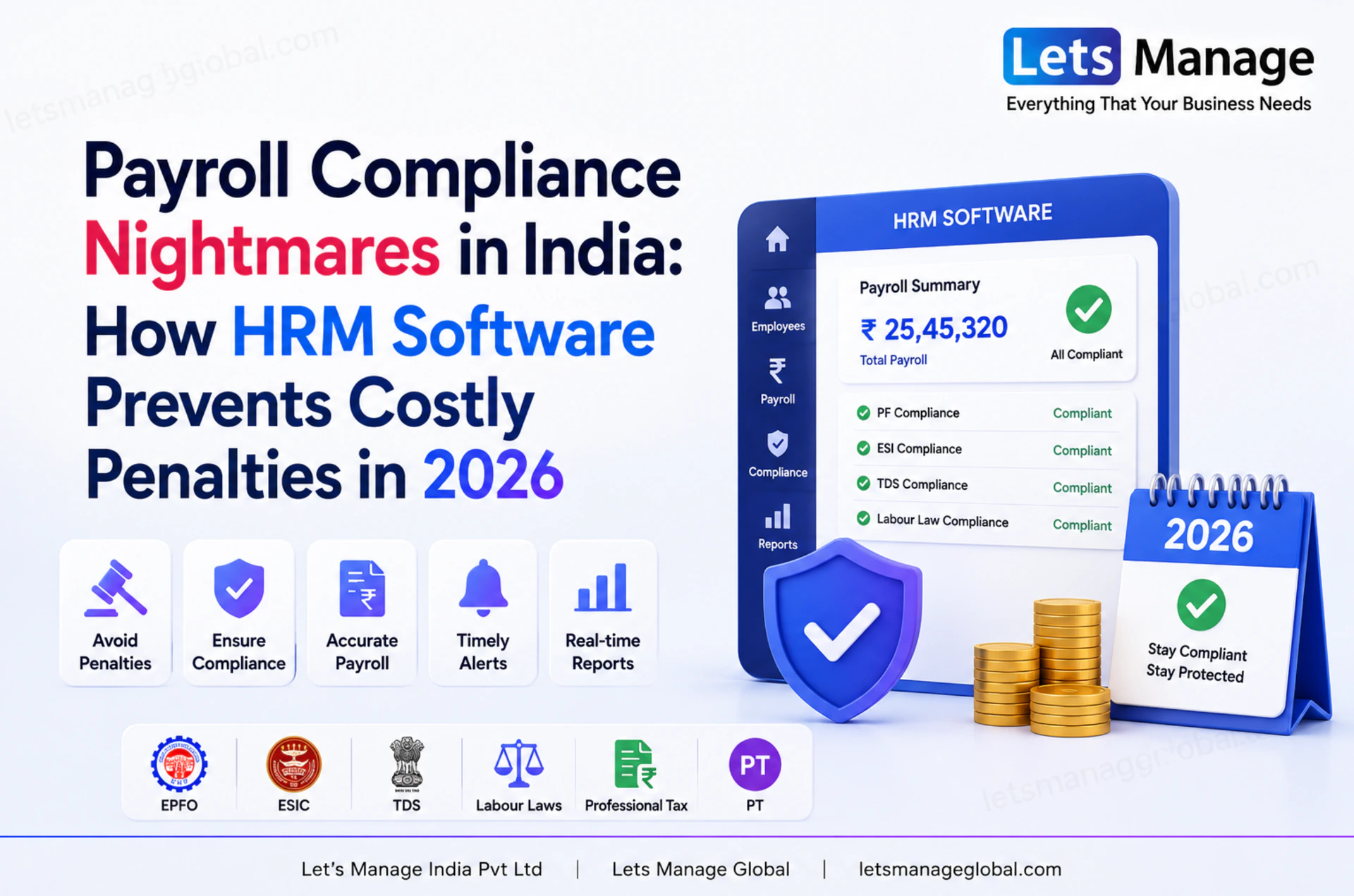
Quick answer: Manual payroll processing in spreadsheets is one of the most common sources of compliance risk for growing Indian businesses, because PF, ESI, professional tax, and TDS rules change periodically and a single missed update or manual entry error can trigger penalties, interest, and in repeated cases, audit scrutiny. HRM software automates these calculations and filing timelines, removing the manual error window entirely.
Where manual payroll actually breaks down
- Rate and slab changes: PF, ESI, and tax slabs are updated periodically, and a spreadsheet formula from last year silently continues using outdated rates unless someone remembers to update it manually.
- New joiner and exit errors: Prorated salary, full and final settlement, and gratuity calculations are among the most error prone manual tasks, especially with high employee turnover.
- Filing deadline misses: PF and ESI contributions have strict monthly filing deadlines, and manual reminders (or no reminders at all) are a common cause of late filing penalties.
- No audit trail: When a compliance question arises, spreadsheets rarely show a clean, timestamped history of who changed what and when.
What HRM software actually automates
- Automatic PF, ESI, professional tax, and TDS calculation based on current statutory rates
- Payroll processing tied directly to attendance and leave data, removing manual reconciliation
- Filing deadline alerts and generated statutory reports ready for submission
- A permanent, auditable record of every payroll run, useful during compliance reviews or audits
The real cost of getting this wrong
Beyond the direct penalty and interest cost, repeated compliance errors damage employee trust (delayed or incorrect salary credit is one of the fastest ways to lose good staff) and can flag a business for closer scrutiny in future compliance reviews, creating an ongoing operational tax on management time.
FAQ
At what team size does manual payroll become risky?
Risk starts earlier than most owners expect, often around 15 to 20 employees, once multiple pay structures, leave types, and statutory categories start overlapping in a single spreadsheet.
Can HRM software handle multiple pay structures and locations?
Yes, this is a standard requirement for growing businesses with multiple branches, shift patterns, or employee categories, and is typically configured once during setup.
Does HRM software replace the need for an accountant?
No, it removes the manual calculation and filing risk, but a qualified accountant or compliance advisor should still review statutory filings, especially during audits or regulatory changes.