

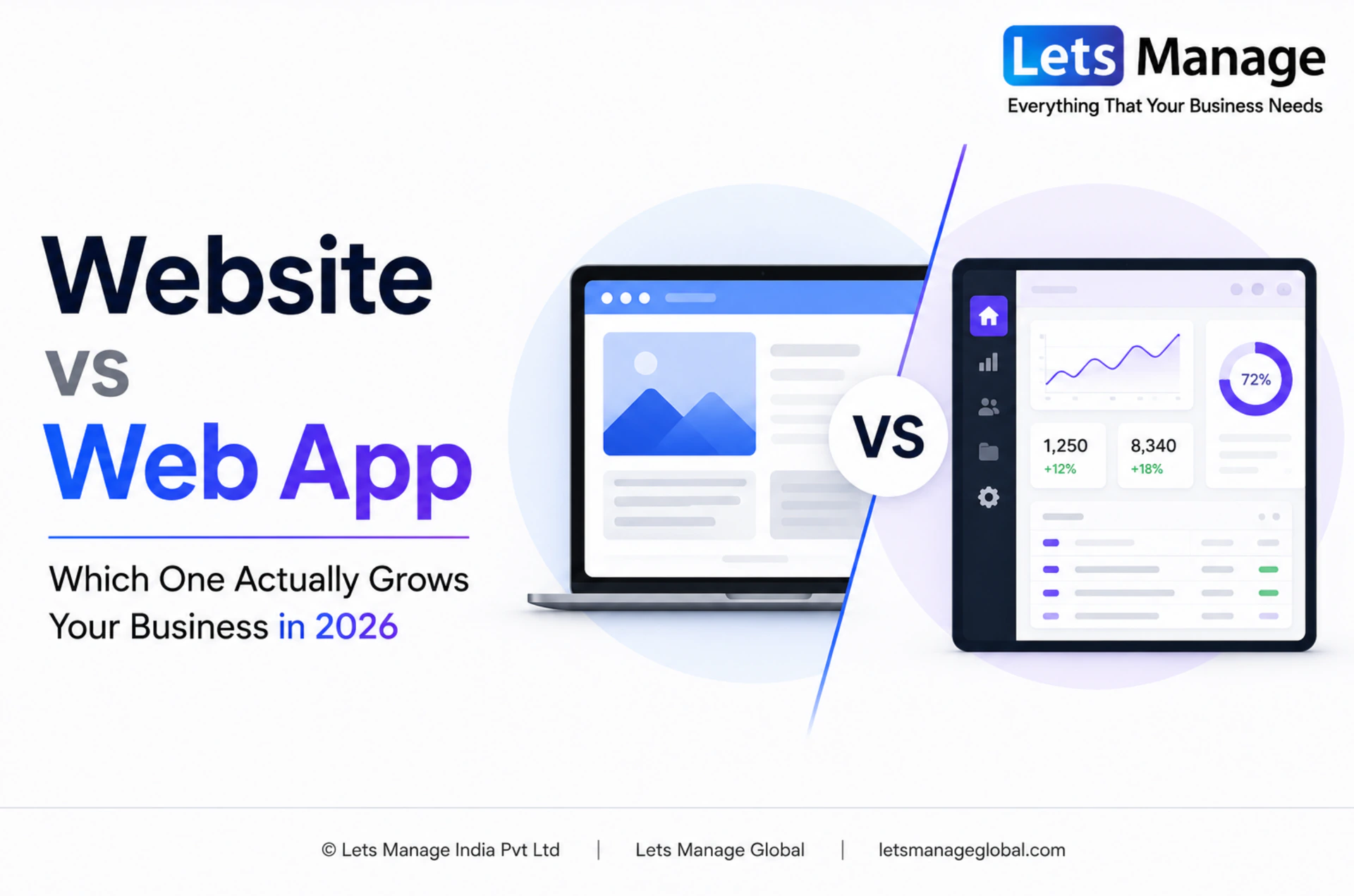
Quick answer: A website exists to inform and convert visitors (leads, sales, bookings), while a web application exists to run part of your operations (logins, dashboards, scheduling, data). Most businesses need a website first and a web application only once repeatable operational tasks start happening online.
The confusion business owners have
Founders often ask for "a website that can also let customers log in and book slots," without realizing that request has quietly become a web application request, with a different pricing model, a different technical stack, and a different maintenance need.
How to tell which one you need
- If the goal is to be found on Google, explain services, and capture leads: you need a website.
- If the goal is to let customers or staff log in, see personalized data, book, pay, or manage something ongoing: you need a web application.
- If both are true, the smart build is a marketing website that sits in front of a separate, cleaner web application, so each part can be optimized for its own job (SEO for the website, speed and reliability for the app).
Real world examples
A yoga and fitness studio chain needed customers to see class schedules, book a slot, and track attendance streaks. A static website could show the schedule, but only a web application could handle live seat availability, waitlists, and automated reminders. That is the exact difference explored in the gym franchise case study later in this document.
The cost and timeline difference
Websites are generally faster and cheaper to launch (3 to 6 weeks). Web applications involve database design, user authentication, and testing across edge cases, so they typically take 8 to 16 weeks and need ongoing technical support after launch, not just occasional content updates.
Common mistake: bolting a web app onto a website platform
Trying to force booking systems, dashboards, or multi user logins into a WordPress or Shopify theme using plugins often works for a few months and then breaks under real usage (double bookings, slow dashboards, security gaps). This is one of the most common "rebuild" projects businesses come back with after 12 to 18 months on a patched together system.
FAQ
Can a website later be upgraded into a web application?
Yes, if it was built on clean, custom code. It is much harder if it was built entirely on a plugin heavy template, because the underlying architecture was never designed to handle logins, data, or transactions safely.
Do I need a mobile app instead of a web application?
Not necessarily. A responsive web application works in any browser on any device and avoids app store approval delays, which is often the better first step before investing in a native mobile app.
What is the biggest risk of choosing the wrong option?
Paying for a website when you needed operational software, then discovering the platform cannot support your real business process, forcing an expensive second build.