

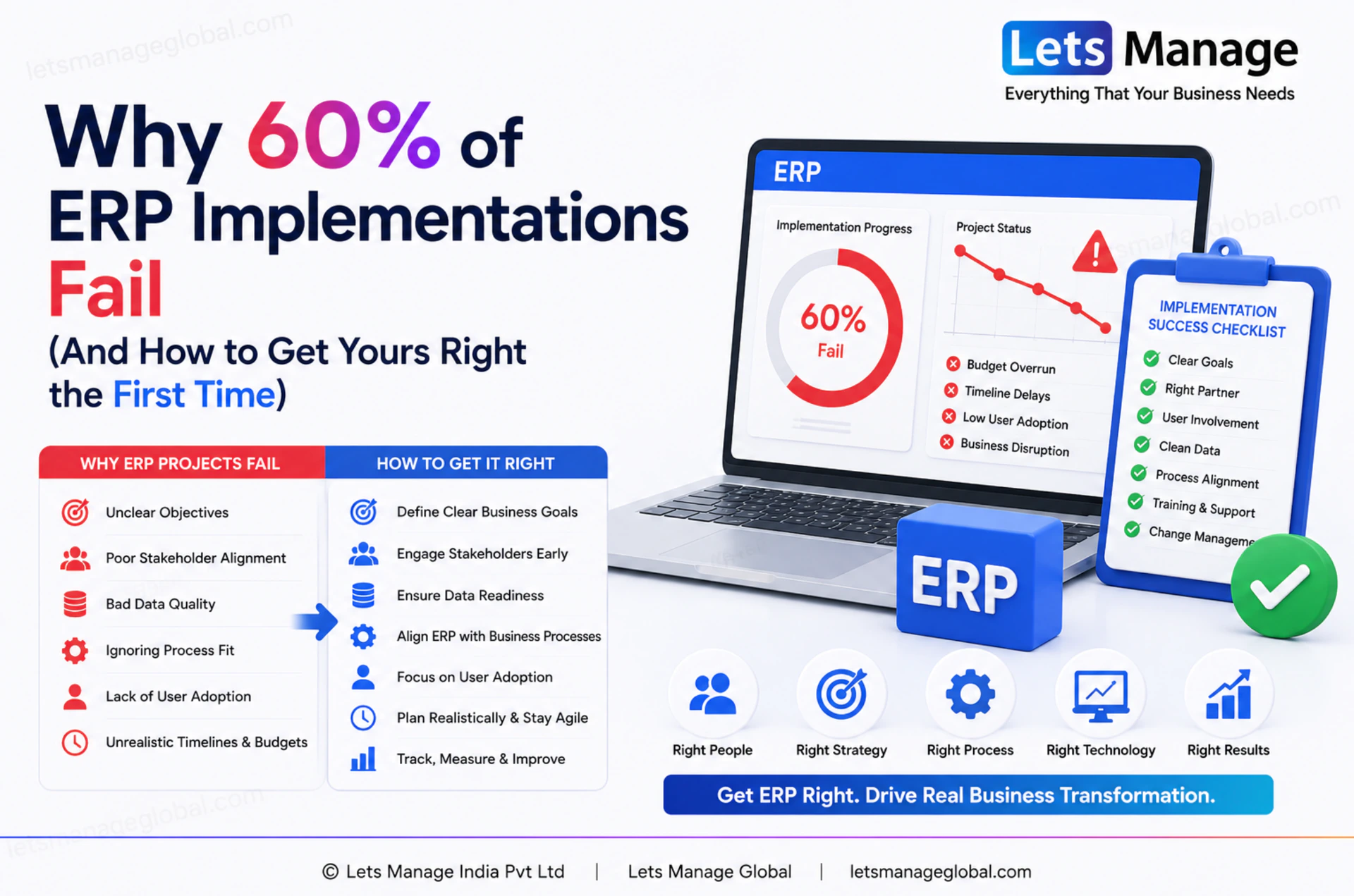
Quick answer: ERP implementations most commonly fail not because of the software itself, but because of unclear process mapping before development, poor staff adoption, and generic systems forced onto a business process they were never designed for. Getting the process mapping and change management right before writing any code is the single biggest predictor of ERP success.
The most common, avoidable failure points
1. Skipping process mapping: Jumping straight into building modules without documenting the business's actual current workflow leads to software that digitizes chaos instead of fixing it.
2. Choosing generic over fit for purpose: A rigid, generic ERP forces a manufacturing business to bend its real production and inventory logic to fit software built for a different kind of business.
3. Underestimating change management: Staff who built years of muscle memory around old systems or paper processes need structured training and a transition period, not a single "go live" day.
4. No phased rollout: Attempting to switch finance, inventory, procurement, and HR modules all at once multiplies risk; a phased rollout isolates problems to one module at a time.
What a successful ERP rollout actually looks like
- A documented "as is" process map before a single line of code is written
- A phased go live plan, starting with the highest impact, lowest risk module
- Dedicated training sessions and a support window immediately after each phase goes live
- Clear, measurable success criteria agreed before the project starts, not defined retroactively
Why custom fit matters more in ERP than almost any other software category
Unlike a website or a simple app, an ERP system touches finance, inventory, procurement, and often HR simultaneously. A poor fit in one module creates downstream errors across the others (wrong stock counts cause wrong financial reports, for example), which is why ERP projects deserve deeper upfront process analysis than most other software builds.
FAQ
How long should a realistic ERP rollout take?
For a mid sized manufacturing or distribution business, 3 to 6 months across phased modules is realistic; rollouts promising a full system live in under a month for a complex business are a red flag.
Should we customize an existing ERP platform or build fully custom?
This depends on how closely the business's real process matches standard industry patterns; highly specific production or inventory logic usually justifies a custom build, while more standard operations can often use a configured existing platform.
What is the single best predictor of ERP project success?
Staff adoption. An ERP that is technically perfect but ignored by the team that has to use it daily delivers zero business value.