LinkedIn Explains Its New Profile Relevance Feed Model: What It Means for B2B Brands
LinkedIn has explained Profile Relevance, an LLM-based system that matches posts to members by professional context. Here is how it works and what B2B brands and founders should change in their posting.
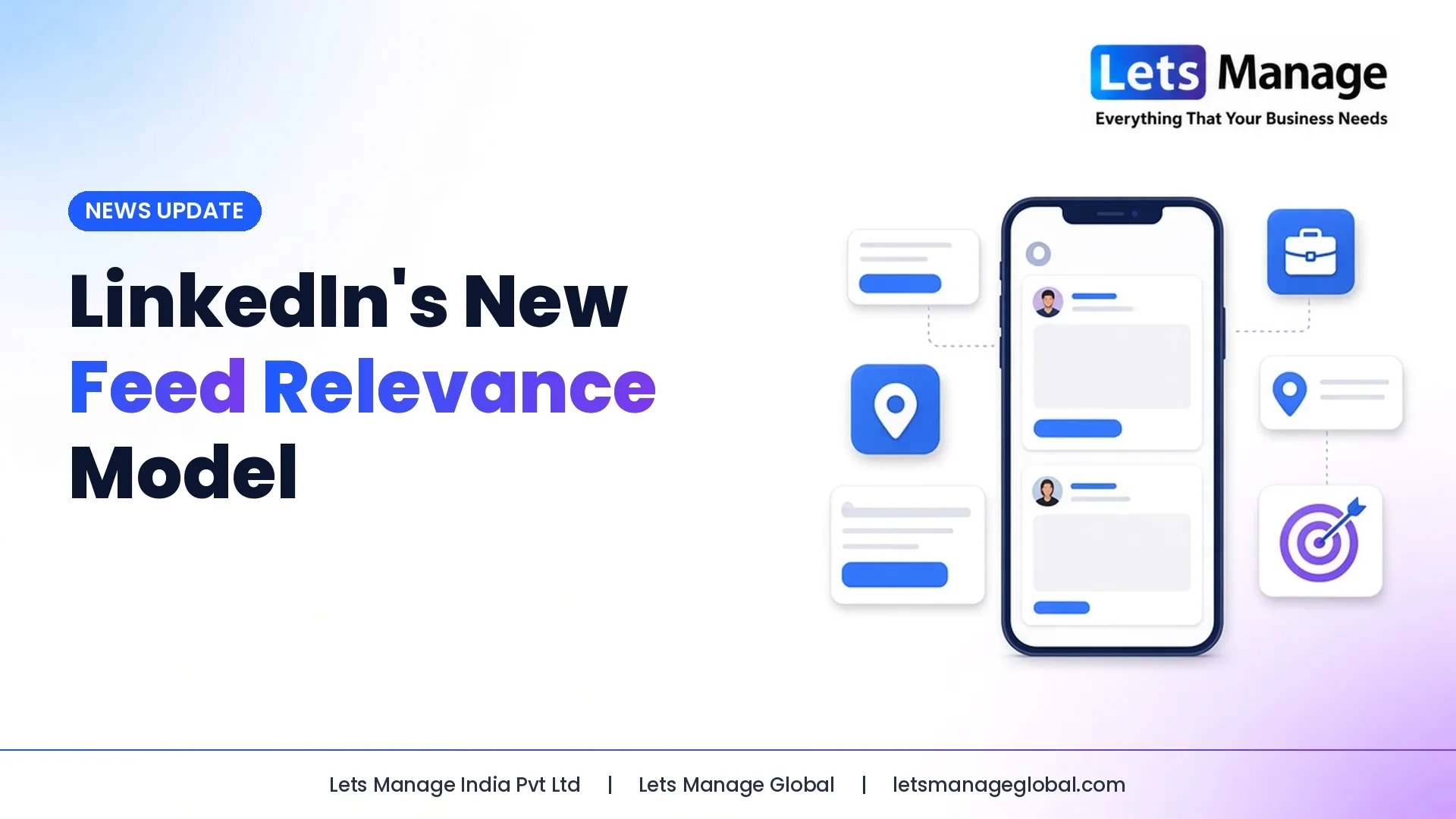
In brief. On 9 November 2026, LinkedIn's engineering team explained Profile Relevance, a system that uses large language model embeddings to match members with posts from people they do not follow, based on professional context such as topic, job title, industry, seniority, education and location. Posts must also show some early engagement from outside the author's network before the system recommends them. For B2B brands and founders, the takeaway is that clear, specific, professionally relevant posts can travel further than before, even from smaller accounts.
What did LinkedIn announce?
In a post on the LinkedIn Engineering Blog, LinkedIn engineer Shiyong Lin and colleagues described how the feed recommends what LinkedIn calls unconnected content, meaning posts from people outside a member's network.
Traditional feed ranking leans heavily on network closeness and engagement. That works at scale, but it makes it hard for newer creators to reach anyone beyond their connections. Profile Relevance adds a layer of understanding about professional context.
Here is how it works, in plain terms:
- A member summary. For each member, LinkedIn builds a structured summary from the professional information on their public profile: headline, summary, skills, work history and education. LinkedIn says it does not include personal attributes such as name or gender.
- A post summary. Posts are represented using their text, titles and video transcripts, plus author details such as location where available.
- Matching. Both are turned into embeddings, numerical representations of meaning, so the system can find posts that fit a member's professional world.
- Location. LinkedIn found that some approaches lost geographic cues, so it now adds the member's and author's country to improve local relevance.
- An engagement check. A post needs at least one like, comment or share from someone outside the author's network before Profile Relevance will recommend it.
LinkedIn reported that, in online experiments, the system increased feed updates viewed and viral actions and reduced how often members hid posts, with stronger gains for members who have little activity history. Those are LinkedIn's own figures.
Who does this affect?
- B2B companies that rely on LinkedIn for awareness and leads.
- Founders and senior leaders who post as individuals, often the strongest voice for a services firm.
- Smaller creators and newer accounts, who now have a clearer route to relevant audiences beyond their connections.
- Regional businesses, because country information now feeds into relevance.
What to do now
-
Fix your profiles first.
Because matching relies on professional context, company leaders' headlines, summaries, skills and experience should clearly describe what they do and for whom. Vague headlines give the system less to work with.
-
Post about specific topics.
A post about "how we cut ERP rollout time for a Pune manufacturer" carries much clearer signals than "excited to share an update".
-
Write for a defined audience.
Name the industry, role or problem. The system matches on topic, job title, industry and seniority.
-
Use clear text with video.
Transcripts are part of how posts are understood, so say the important words out loud and in the caption.
-
Earn early engagement from beyond your network.
Joining relevant conversations, collaborating with partners and tagging people who genuinely contributed all help a post get its first interactions outside your connections.
-
Avoid generic filler.
LinkedIn's evaluation explicitly measured and reduced generic content. Posts that could have been written by anyone are less likely to be picked up.
-
Keep your Company Page complete,
and align it with how your leaders describe the business.
Questions and answers
What is LinkedIn Profile Relevance?
It is a system LinkedIn uses to recommend posts from people outside a member's network. It turns member profiles and posts into embeddings so it can find posts that fit a member's professional world, based on topic, job title, industry, seniority, education and location.
What information does LinkedIn use to build a member summary?
LinkedIn builds a structured summary from the professional information on a member's public profile, such as headline, summary, skills, work history and education. It says it does not include personal attributes such as name or gender.
Does a post need engagement before Profile Relevance recommends it?
Yes. A post needs at least one like, comment or share from someone outside the author's network before Profile Relevance will recommend it.
How should B2B brands adapt their LinkedIn posts?
Fix leaders' profiles so they clearly describe what they do and for whom, post about specific topics for a defined audience, use clear text with video, and avoid generic filler, which LinkedIn's evaluation measured and reduced.
Sources
- LinkedIn Engineering Blog, Profile Relevance: Boosting Feed Relevance with LLMs at LinkedIn, Published 9 November 2026
- Social Media Today, LinkedIn explains its improved content recommendation system, Published 9 November 2026
- LinkedIn Help, Create a LinkedIn Page
Checked by the Lets Manage Global team. Last updated 10 Nov 2026.