

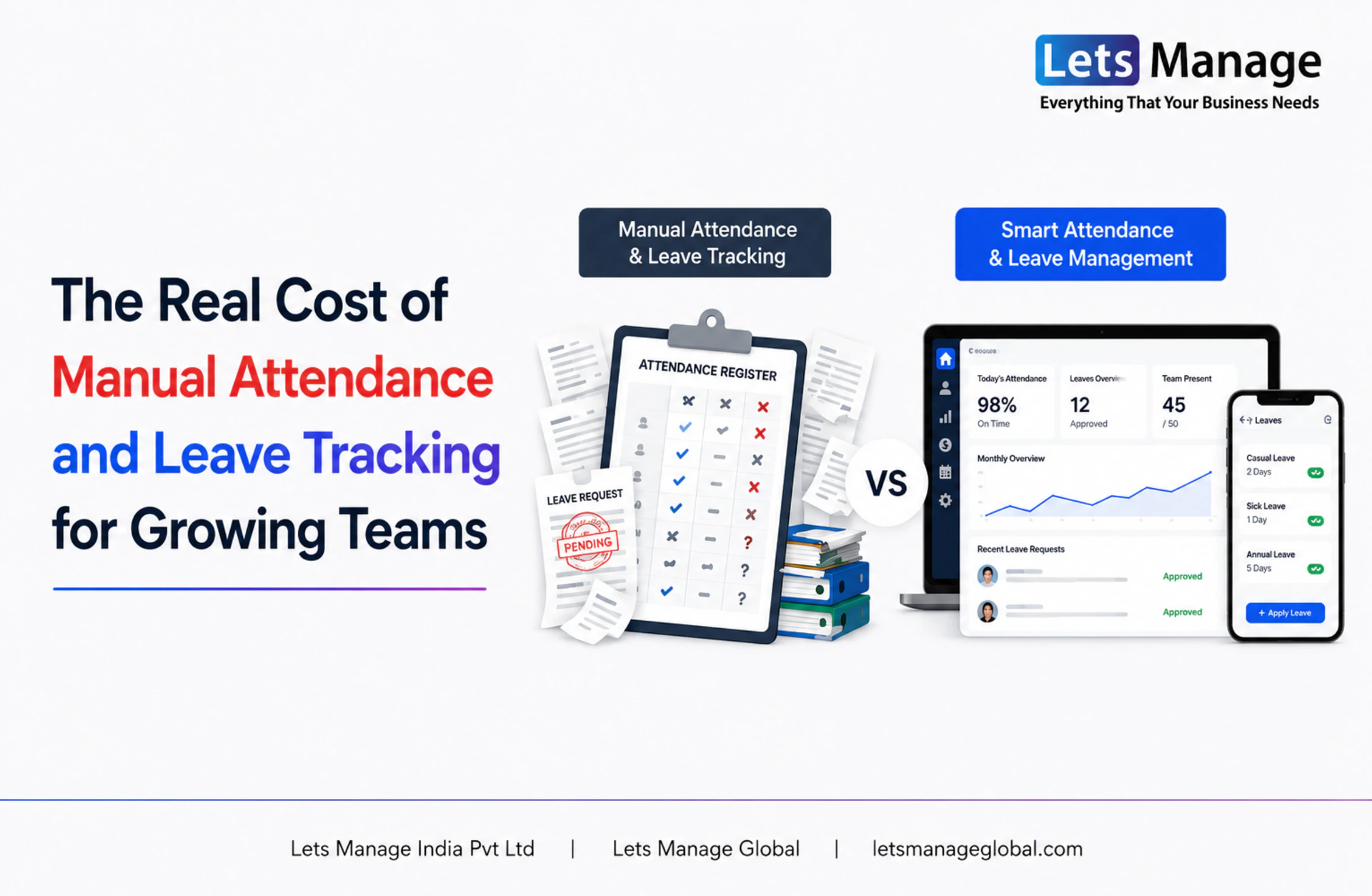
Quick answer: Manual attendance and leave tracking costs growing businesses far more than the time spent filling registers. It creates payroll disputes, unplanned staffing gaps, and hours of monthly reconciliation work that automated HRM systems eliminate almost entirely.
The hidden costs owners rarely calculate
- Reconciliation time: HR staff spend hours each month cross checking physical registers or spreadsheets against payroll, time that produces zero business growth.
- Payroll disputes: Disagreements over leave balances or attendance days are one of the most common sources of employee grievance in businesses without a transparent system.
- Buddy punching and register errors: Manual sign in sheets are trivially easy to falsify or misrecord, quietly inflating payroll cost over time.
- No real time staffing visibility: Managers often discover a staffing shortfall only on the day it happens, because there is no live dashboard showing who is on leave tomorrow.
What automated HRM systems fix immediately
- Biometric or geo tagged check ins that remove manual entry and falsification risk
- Real time leave balance visibility for both employees and managers, reducing disputes
- Automatic payroll sync, so attendance data flows directly into salary calculation without manual re entry
- Manager dashboards showing upcoming leave and staffing gaps before they become a crisis
Why this matters more for multi branch and multi shift businesses
A single location business can often manage manual tracking without major issues. The moment a business operates across multiple branches, shifts, or a large frontline workforce, manual systems lose accuracy fast, because there is no single, real time source of truth across locations.
FAQ
Is biometric attendance necessary, or is a mobile app enough?
Either works well; the right choice depends on whether staff are location bound (biometric suits factories and offices) or field based (a geo tagged mobile app suits sales, delivery, and service teams).
How quickly does an HRM system pay for itself?
Most growing businesses recover the cost within 6 to 12 months through reduced reconciliation time, fewer payroll disputes, and better staffing planning, before even counting compliance risk avoided.
Does automating attendance reduce HR headcount?
It usually redirects HR time from manual reconciliation toward higher value work like hiring and employee engagement, rather than eliminating the role.