The Business
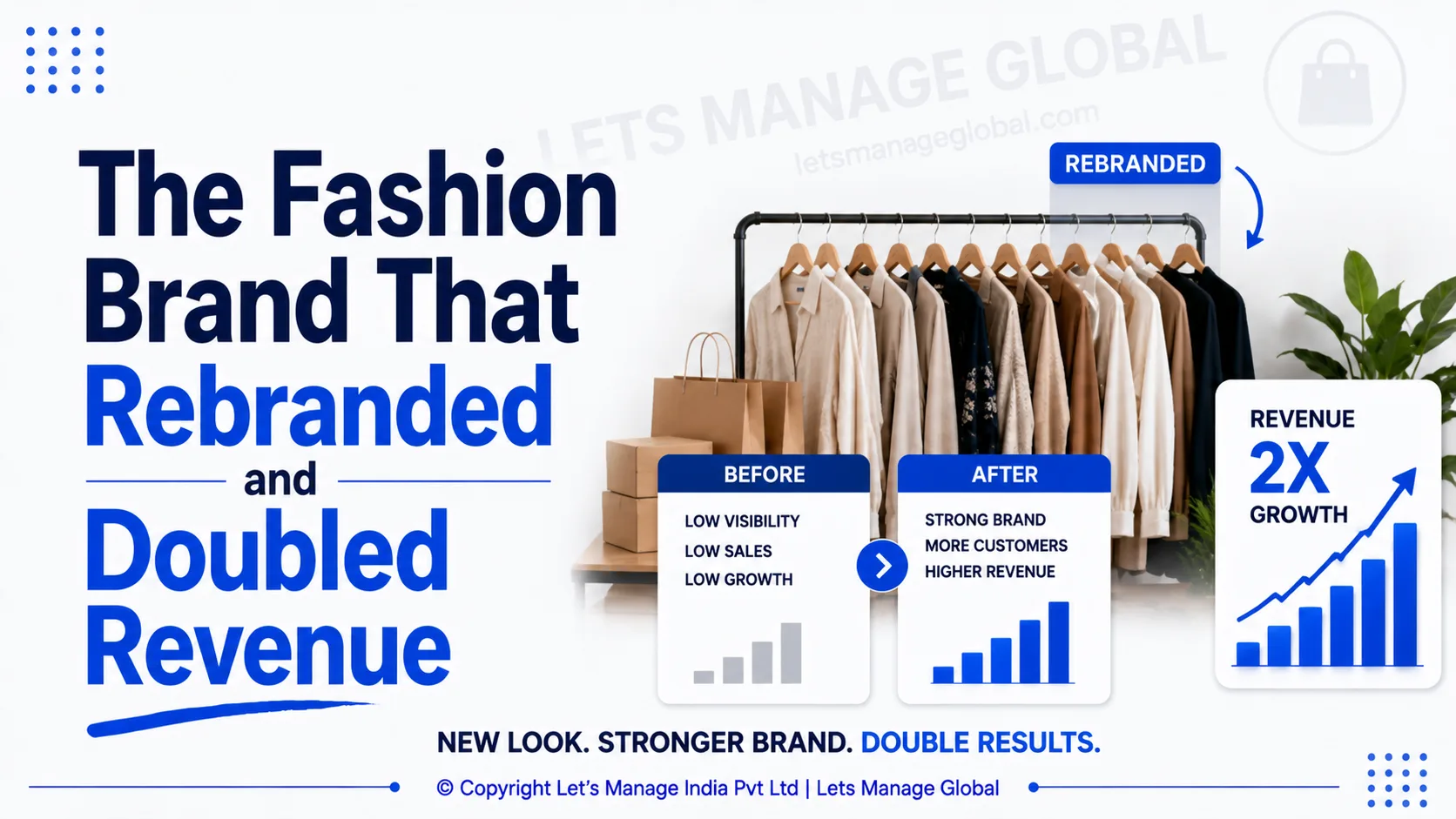
Ananya started a sustainable fashion brand four years ago -- ethically sourced materials, local artisans, handcrafted production techniques. The product was genuinely exceptional. But revenue was stuck at Rs 55 lakh despite strong reviews and growing social media traction.
The Problem
A brand and positioning audit identified the core issue immediately: Ananya was pricing at Rs 1,400 to Rs 2,200 for a product that could credibly command Rs 3,500 to Rs 5,500, given its quality, provenance, and sustainability credentials.
The underpricing was creating a positioning failure. Premium buyers -- the natural audience for sustainable, handcrafted fashion -- did not trust a product at a mid-market price point. Mid-market buyers could not afford the premium comparison she was being measured against. She was positioned between two segments and belonging to neither.
Additionally, a wholesale channel was consuming 40% of revenue at margins that made no economic sense -- the complexity and discounting eliminated any profitability from that channel.
The Solution
→ Complete brand repositioning: photography, copywriting, packaging, and pricing all rebuilt to reflect the premium market
→ Pricing increased by an average of 130% across the product line, with a clear public narrative: 'This is what ethical fashion actually costs to produce when made honestly'
→ Instagram and influencer strategy shifted exclusively to premium lifestyle audiences
→ Wholesale channel discontinued entirely -- full focus on D2C premium positioning
→ A brand story developed and made deeply visible: the specific artisans, their villages, their techniques, the materials and their origins
→ Post-purchase packaging redesigned to reinforce the premium experience and generate organic social sharing
The Results
✓ Average order value: Rs 1,600 to Rs 3,900
✓ Conversion rate: initial 40% decrease, fully recovered to prior level within six months
✓ Revenue: Rs 55 lakh to Rs 1.04 crore in 18 months -- first crore crossed
✓ Net margin: 11% to 28%
✓ Return rate: reduced (premium buyers are more considered in their purchase decisions)
✓ Customer demographic: successfully transitioned to primary premium buyer segment
Key Lessons
Underpricing a premium product does not make it more accessible -- it makes it less credible. Price is a brand signal. A sustainable, handcrafted product priced at commodity level communicates to the premium buyer that it is not what it claims to be.
💡 The fear of pricing too high causes far more business damage than actually pricing too high. Most businesses discover, after raising prices, that they have more customers than before -- better customers who value what they are actually buying.